Diseases and pests
Fungi
The three most common fungi to affect boxwood are Cylindrocladium, Volutella and Phytophthora, fungi flourish in warm, damp conditions.
The best treatment is prevention:
- Buying plants from a disease-free, reputable nursery
- Establishing good drainage
- Maintain an open growth habit
- Allow air to circulate in and around the plants
Cylindrocladium buxicola - Box Blight
What is it?
- Box blight is a fungal disease that affects the leaves and stems of Buxus plants, it doesn’t attack the roots. Unlike other fungal diseases that also affect box, it can be fatal for the plant
- The fungal spores are activated by water
- The spores are most active at 23.7c but are infectious when temperatures are between 5-28c
- Not all Buxus plants are as susceptible as each other
- Some other plants in the Buxaceae family can also be infected with Box Bight such as Pachysandra and some non-Buxaceae plants can also be affected, particularly Geranium sanguineum
Top 5 Most Susceptible Varieties
- Buxus sempervirens ‘Memorial’
- Buxus sempervirens ‘Suffruticosa’
- Buxus sempervirens ‘Morris Midget’
- Buxus sempervirens ‘Blauer Heinz’
- Buxus sempervirens ‘Ingrid’
Top 5 Least Susceptible Varieties
- Buxus microphylia ‘Belvédère’
- Buxus harlandi
- Buxus microphylia ‘Trompenburg’
- Buxus microphylia ‘National’
- Buxus bodinieri
How to spot it
-
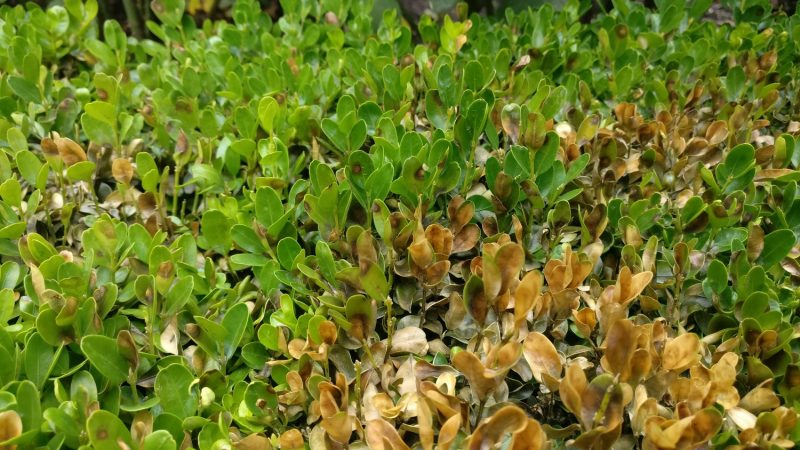
- Early stages of development
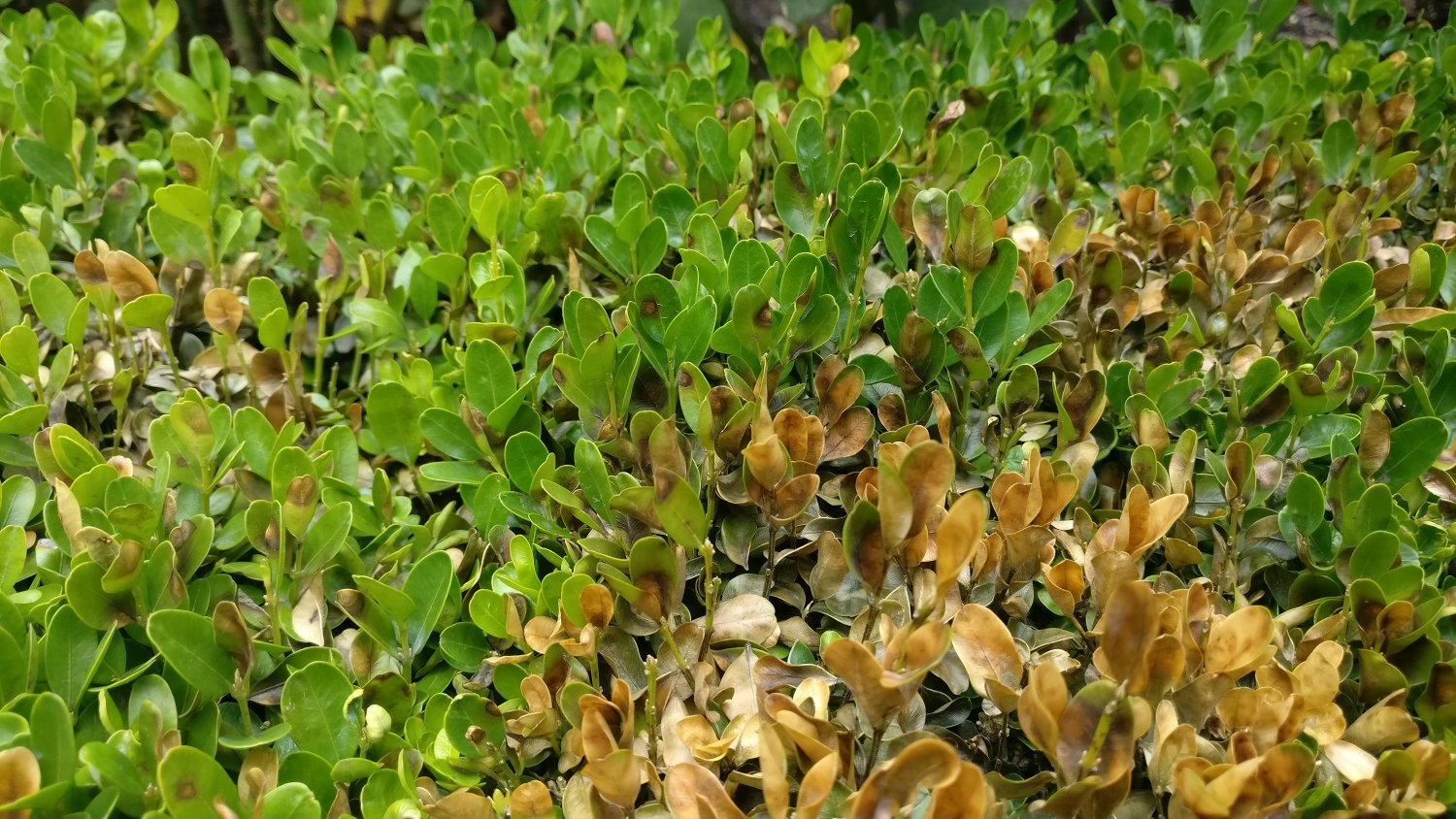
-
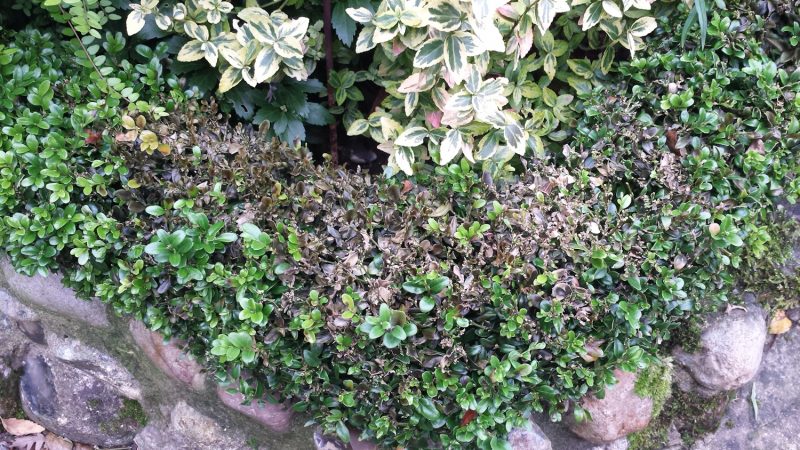
- Leaves end up black before falling off
-
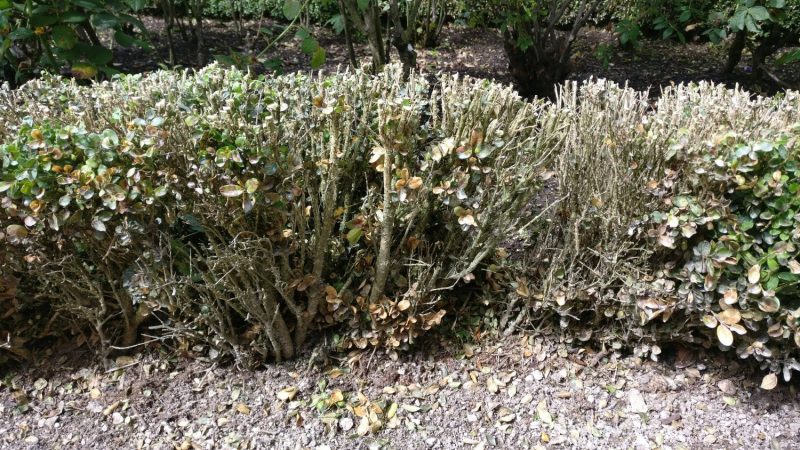
- Plants end up defoliated
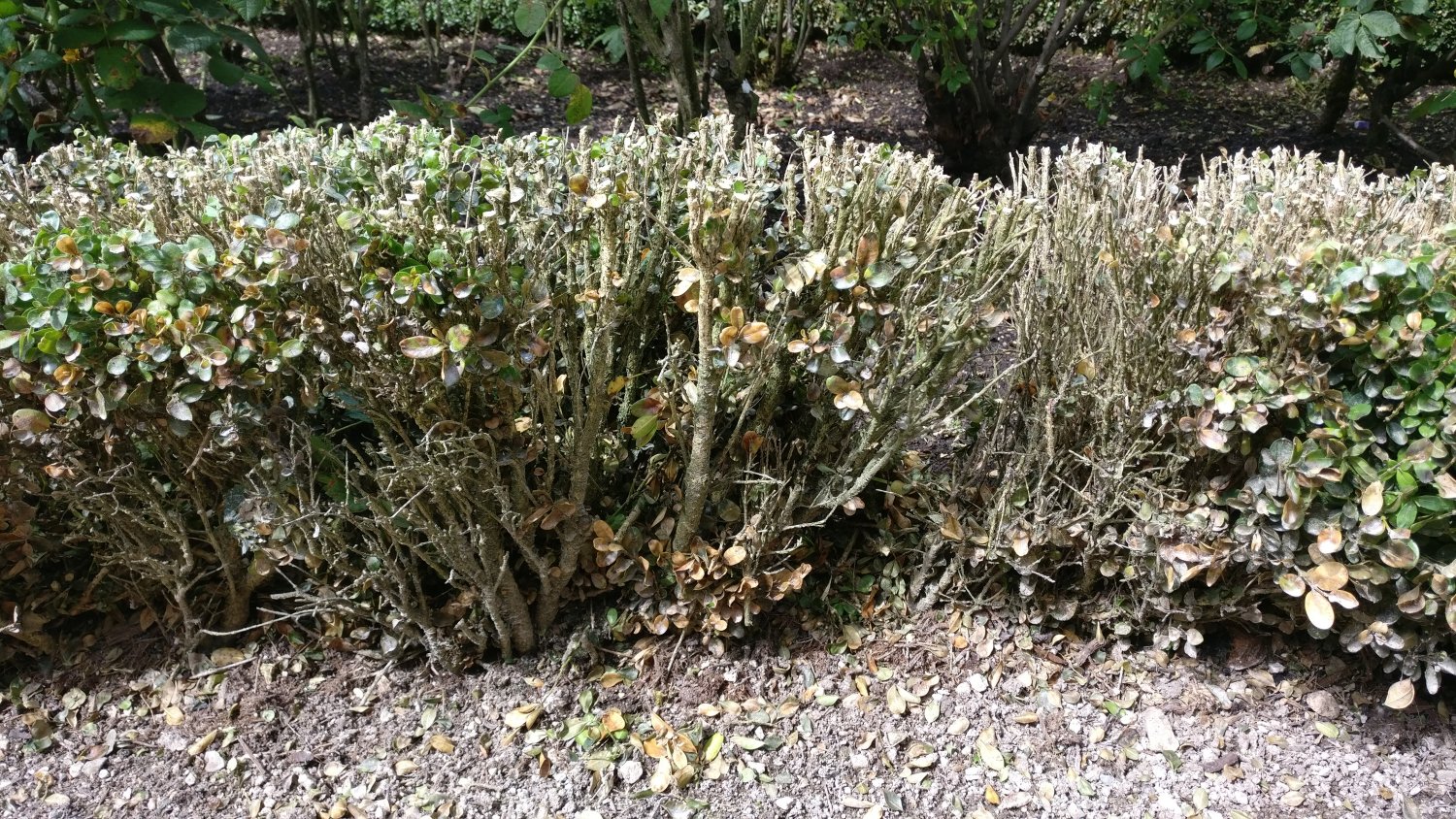
-
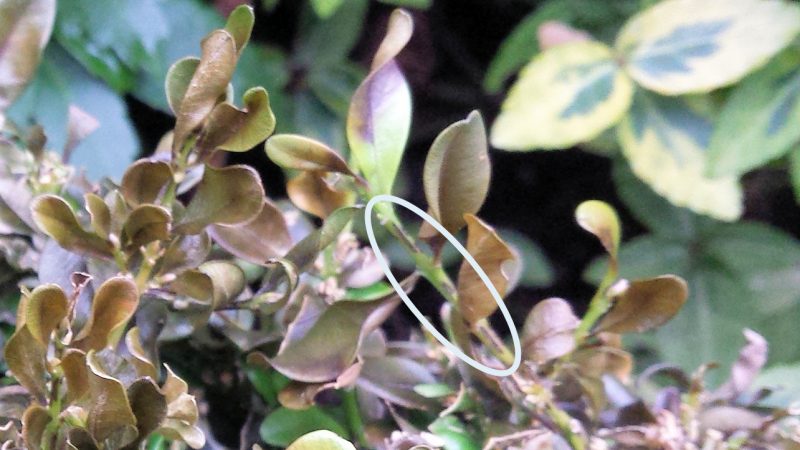
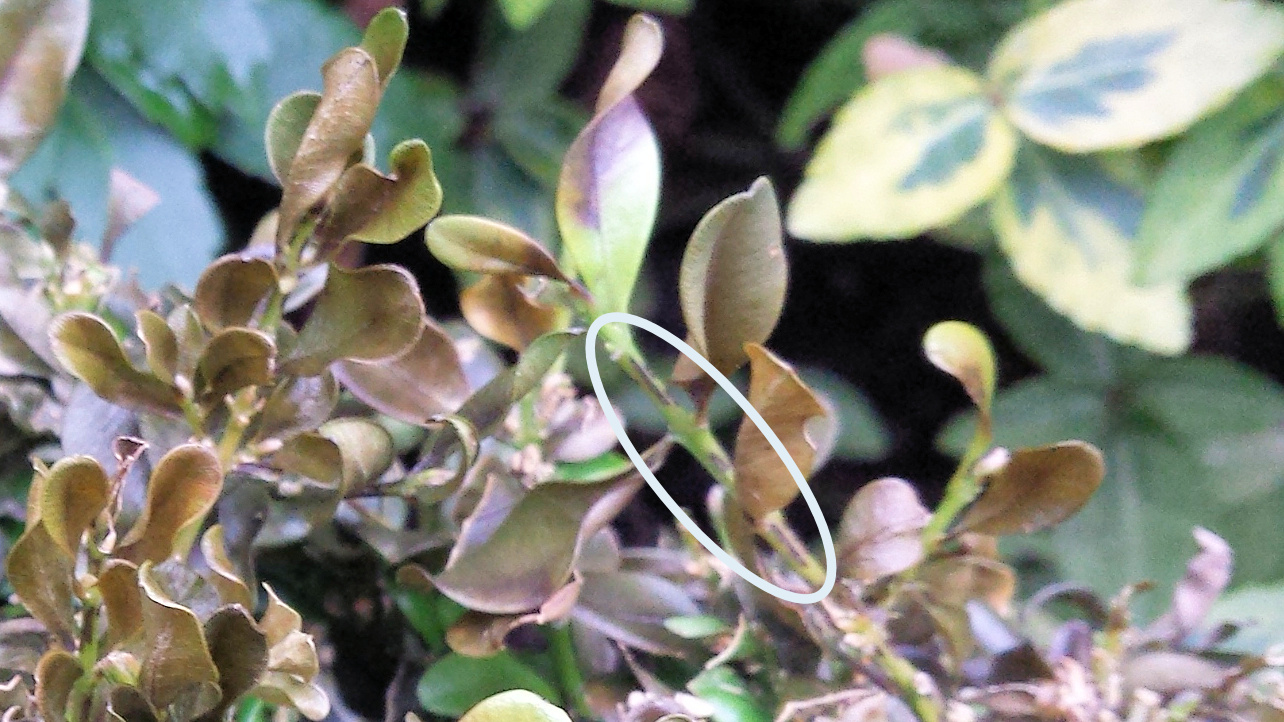
- Black stem liaisons
How to deal with an infection
Use a fungicidal spray
Professional gardeners (with spraying licence)
- Signum
Domestic gardeners
- Fungus Clear Ultra (Triticonazole)
- Provanto Fungus Fighter Plus (Tebuconazole and Trifloxystrobin)
- Provanto Fungus Fighter Concentrate (Tebuconazole)
How to avoid it
- Make sure you tools are clean – regularly re-clean as you move along a hedge or when you move between plants – a 5-10% bleach/water mix or garden disinfectant in a bucket works well for hand shears and other tools, a spray can be used for powered clippers – make sure you wipe off excess before reusing the shears to avoid affecting the plants
- Use a light weight mulch like Strulch or Topbuxus Carpet to reduce splash and keep any fallen leaves covered – mulching can reduce box blight spreading by 97%
- Make sure your plants have enough air flow through them by regularly thinning them and avoid too many plants growing close and reducing the air flow
- Raise the canopy to around 150mm to avoid rain splashing any spores back into the plants
- After clipping clear all leaf debris from inside and around the plants – a garden vacuum is better than a blower which could spread the problem by moving infected leaves to a new area
- If you need more plants it’s best to take cuttings from your existing plants
- If you bring Buxus plants into your garden put them in a quarantine area for at least 4 weeks to check for symptoms that might have been masked by fungicides used by nurseries or growers
- Don’t let watering system spray onto box hedging or topiaries
- Avoid over stimulated growth caused by over use of fertilisers
More information
The history of Cylindrocladium buxicola
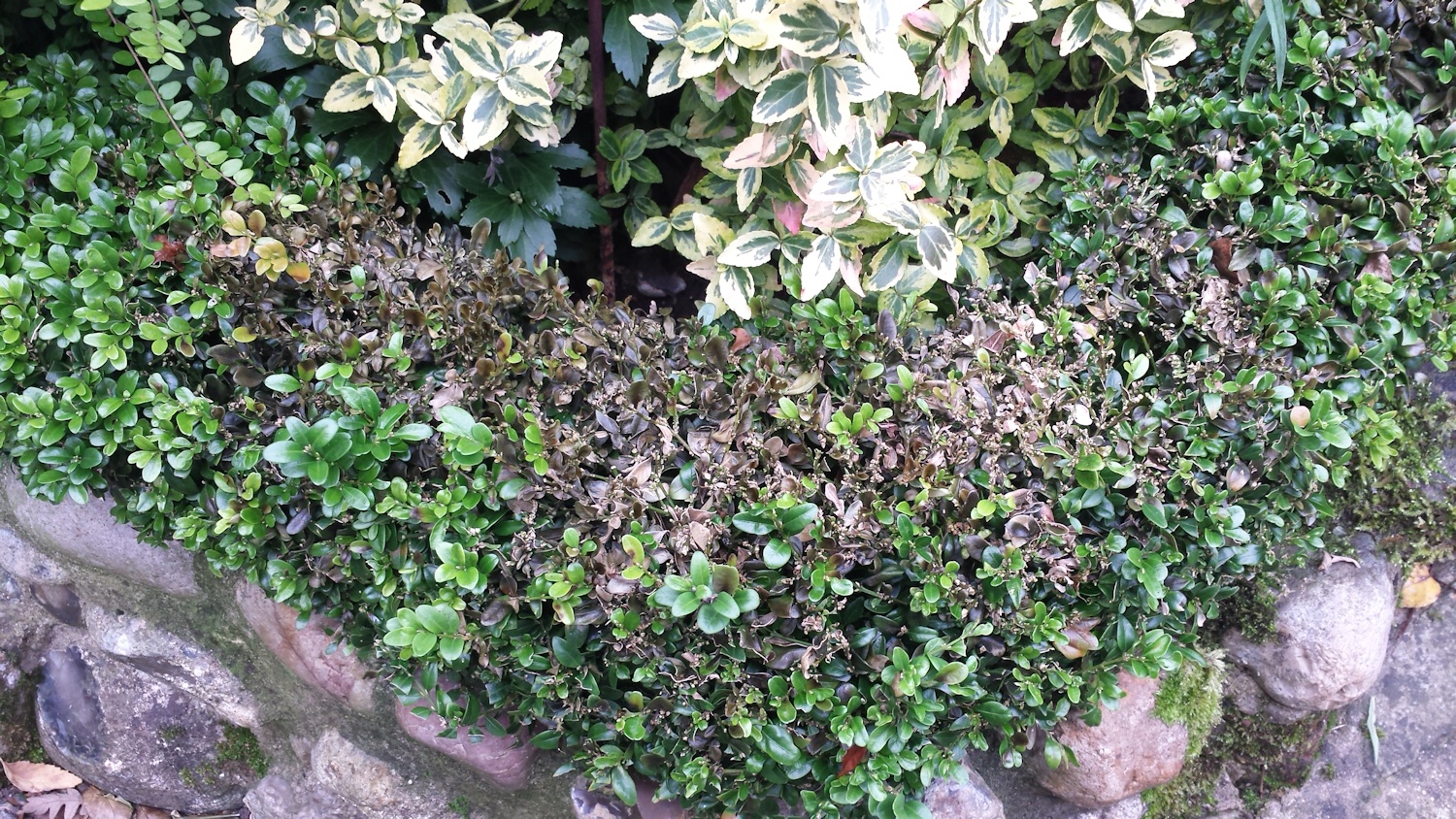
Cylindrocladium was first recognised to be a major problem in the UK and now affects Europe, America and New Zealand. It causes brown spots on the leaves, followed by rapid defoliation and black streaks on the twigs, affecting part or the whole of a plant or hedge. Treatment is probably best left to a professional nurseryman as most of the effective fungicides are unavailable to amateur gardeners. Even the professional fungicides are frequently ineffectual but there are reports of spontaneous recovery in the long term.
Specifically for Cylindrocladium box blight, in the UK, the Royal Horticultural Society ( RHS) has been undertaking research work for a number of years.
The number of cases of Cylindrocladium blight on Buxus has increased steadily in the last few years and is now the highest the RHS advisory service has observed since 1998. Fairly warm and wet weather is conducive to this disease. As nurseries are becoming more aware of this problem Buxus plants are subject to regular fungicidal spraying and symptoms are suppressed. However, with suppression of symptoms, there is a higher risk of unknowingly introducing the disease to our gardens.
In 1996, the RHS started a three year field trial evaluating fungicides for the control of Cylindrocladium blight at the ADAS Arthur Rickwood site (Cambridge) which was partially funded by English Heritage. The work being carried out assessed the protective and eradicative action of several fungicides available to both amateur and professional gardeners on Buxus sempervirens ‘Suffruticosa’. In the first year, several products were identified as working better after either a preventative or curative application. Complete control was however not fully achieved.
In the second and third year, preventative and curative treatments were combined to test if complete control of the disease could be achieved. The fungistatic action (ability to inhibit growth and reproduction without killing the fungus) of the fungicides was also assessed by checking the plants for signs of the disease after the end of the treatments. This way it was hoped that more informed advice about fungicide application could be given in the future.
The work on the identification of the fungus and the phylogenetic analysis was published in 2002. After that in vitro fungicide tests and host susceptibility work were carried out. This was presented to EBTS by one of the RHS’s Principal Plant Pathologists, Dr Beatrice Henricot, and a resume of the work was published in our magazine Topiarius Volume 6 Summer 2003. We are indebted to her and to the RHS for their continuing work in trying to resolve this problem.
In the RHS magazine ‘The Plantsman’, published in September 2006, a very informative article was issued entitled ‘Box blight rampages onwards’ where Dr Henricot reviewed the situation and outlined future research being undertaken to try and mitigate the effects of this disease whilst also trying to find a permanent cure.
Volutella buxi (‘canker’)
In certain plants or their branches new growth starts late and is less vigorous than in healthy plants. Leaves turn brown and turn upwards close to the stem, with small, pink fungus fruiting bodies on them. The bark of the stem is loose, revealing grey discoloured wood. Treatment is to remove all infected branches in the spring and spray with a copper fungicide.
Phytophthora - root rot
First described by Heinrich Anton de Bary in 1875. Over two hundred different species so far discovered affecting many different plant species. Commonly thought of as a fungus like organism due to its similarities, it has however a very different evolutionary history with its cell walls being made up of cellulose rather than chitin which makes up fungal cell walls. This means it is actually a oomycetes or water mold, which makes it more related to algae than fungi.
Unfortunately, it affects a significant number of topiary and hedging plants:
- Aucuba – Laural
- Buxus – Box
- Ilex – Holly
- Lavandula – Lavender
- Rhododendron
- Taxus – Yew – very susceptible
- Viburnum

Main symptoms:
- Wilting
- Yellow/reduced foliage
- Branch dieback – leaves going dark brown and falling off
It is spread by spores in moist soil and can therefore be spread by moving soil around a garden or by water movement through soil such as rain run off or poor drainage. The spores can survive in a resting state for many years.
Testing and treatment
Checking to see if Phytophthora is present in soil is easily done using a Lateral Flow Test. It used to be the case that removal of the dead plant including roots and soil around them was required. Now, removal of as much dead plant material as possible is advised, but not the soil which is in most cases not practical. Instead focus on avoiding compaction, mulch the area and don’t over fertilise, then replant with plants that can cope with getting waterlogged. New plants need to be well looked after in their early years so that good strong root growth is formed, this will be helped by having healthy soil full of organic matter, good microorganisms and worms.
Psyllid (Psylla)
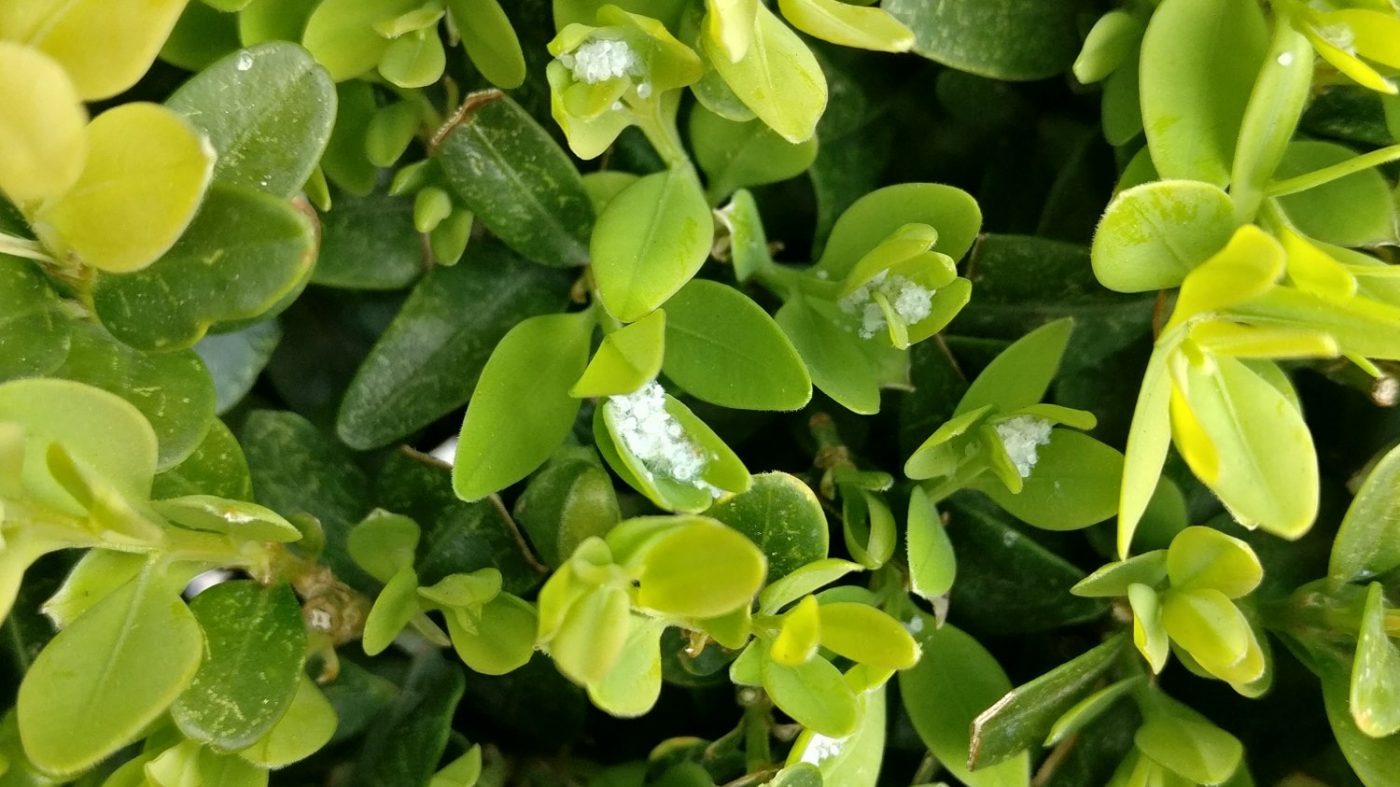
The nymphs of Boxwood psyllid (Psylla buxi) suck on the sap from the base of new leaves in spring, causing cupping of the leaves making them look like small ‘brussels sprouts’. They leave white flecks or a profuse white powder which can be seen in the leaf tips and when the bush is agitated.
Psyllid damage is mainly aesthetic so light infestations will produce only scattered leaf cupping, but this can build up over time.
Treat by spraying with insecticidal soap or ‘summer’ horticultural oil in spring or carefully with a chemical insecticide.
The major natural insect predators in order of importance based on their abundance are anthocorid hugs (Anthocoris nemorum), ladybird beetles (Propylea 14-punctata, and Adalia bipunctata), the European earwig (Forficula auricularia) and the green lacewing (Chrysoperla carnea).
Download Topiarius Volume 5 article about Green Lacewings PDF
Download Topiarius Volume 5 article ‘Box psyllids-biology, occurrence and predators’

Boxwood mite (Eurytetranychus buxi)
These tiny spider-like mites attack leaf surfaces, resulting in yellow scratch-like spots on the upper surface of leaves, giving them a silvery appearance from a distance.
Most active in early summer when temperatures are at 21c when the life cycle can be as short as 10 days.
Treat by repeated strong sprays of water to wash off the leaves or a solution of horticultural soap (this suffocates them).

Scale Insects
The number of different kinds of these insects depends on where you are, in the UK there are around 25 whereas in somewhere like Indiana, USA there are 60. Some of these will affect topiary and hedging plants to a greater or lesser degree. They range in size from 1-10 millimetres, mostly active May-August, outside generally just one life cycle per year and they particularly like warm sheltered areas. Scale insects are sexually dimorphic (have two different forms) – the adult males have wings in their final life stage whereas females remain ‘scale-like’ in appearance. During their early stages as nymphs, they are relatively mobile, but once mature and have grown their hard waxy outer layer, they will stay in one place feeding on the sap of the host plants. Some lay egg masses on stems and undersides of leaves whilst others keep their eggs hidden under their shells. Many produce a sticky sugary substance called honeydew from the sap that they suck.
The secretion isn’t harmful to the plants but can reduce light levels if it is on leaves and thus impedes photosynthesis which will reduce plant strength. The honeydew can also become the host for black sooty mould, again not a direct threat to the plant unless there is too much of it when it will reduce further photosynthesis. Its presences is another good indicator of a lack of air flow in the plant.
Topiary and hedging plants affected:
- Aucuba japonica – Spotted Laurel
- Buxus – Box
- Camellias
- Euonymus
- Ilex – Holly
- Laurus nobilis – Bay
- Taxus – Yew
- Rhododendron

Treatment
To treat an infestation of scale insects, it’s best to treat both the environment and the pest. Make sure there is good air movement in and around the plant, this is a recuring requirement for good plant health particularly in hedges and topiarised plants and a requirement that is often seen to be overlooked. The most effective time to treat scale insects is when they are young and before they have developed their hard waxy outer layer that tends to be impenetrable. There are several treatments that can be used. Neem oil works in a number of ways, one by suffocating the insect at all stages of its development and another by affecting the way insects eat (whilst easily available, it is not registered for use in the UK). Horticultural soaps, which work in the same way, can also be used. Both will need to be applied a few times to be effective. Alternatively, other insects can be used as a control, these include varieties of parasitic wasps, soldier beetle, lacewing, ladybirds and nematodes. These should be applied when the insects are young and on the move. Some birds like Blue Tits will also eat scale insects but are unlikely to keep things under control on their own.
Honey Fungus
Honey Fungus was first described by the Danish mycologist Martin Vahl in 1790 as Agaricus mellea, but in 1871 was moved to its present genus by the German mycologist Paul Kummer, becoming Armillaria. Top of many plant health enquiry lists, this is another nasty problem to overcome if found in your garden. Unlike Phytophthora, honey fungus will actively spread via Rhizomorphs which are sometimes described as boot laces emanating from areas of infection. These travel through moist soil anything between 2.5 to 20cm below the surface and deeper if the ground is drier. The Rhizomorphs can travel up to a metre a year. When these tendrils come into contact with another susceptible host, they infect it by penetrating the outer layer of the plant and spreading inwards to produce mycelium on the inside of the bark. This thin white or creamy white layer smells of mushrooms if bark is peeled away from infected plants.

Commonly affected woody plants used in topiary and hedges include:
- Aucuba – Laurel
- Crataegus – Hawthorn
- Cupressus – Cypress
- Ligustrum – Privet
- Pyracantha
- Rhododendron
- Thulja
- Viburnum
It can also affect:
- Berberis – Barberry
- Carpinus – Hornbeam
- Euonymus
- Ilex – Holly
- Osmanthus
The good news is that it rarely affects:
- Buxus – Box
- Laurus – Bay laurel
- Lavandula – Lavender
- Lonicera – Honeysuckle
- Griselinia
- Pittosporum
- Rosmarinus – Rosemary
- Taxus – Yew
Commonly affected woody plants used in topiary and hedges include:
• Upper part of the plants die back unexpectedly during dry hot weather or over a few years in normal conditions (indicating root problems)
• Leaves are smaller and paler
• Indications that the plant is in its death throw with either mass flowering or no flowers produced
• Bleeding/cracked bark
• Early autumn leave colour
• Dead or dying roots
• Mycelium growth under bark
• Rhizomorphs in soil spreading from infection
Main symptoms:
• Upper part of the plants die back unexpectedly during dry hot weather or over a few years in normal conditions (indicating root problems)
• Leaves are smaller and paler
• Indications that the plant is in its death throw with either mass flowering or no flowers produced
• Bleeding/cracked bark
• Early autumn leave colour
• Dead or dying roots
• Mycelium growth under bark
• Rhizomorphs in soil spreading from infection
In some cases, honey-coloured mushrooms, with a white ring on the stem just below the gills, can form in clumps around the infected area or along the route of the Rhizomorphs in autumn.
Treatment
This is similar to Phytophthora i.e. removal of as much of the dead or infected plant material as possible, avoiding compaction, mulching and not over fertilising. As rhizomorphs cannot grow if they are disconnected from the infected material, it is key to take out the root/stump of infected plant removing the rhizomorphs source of food.

Cryptocline taxicola
This a fungal infection that affects the leaves of some yew trees and is being reported more often than it has been in the past, this may just be awareness or it might suggest it is becoming more widely spread. Currently it can be found across Europe but is uncommon in the UK.
Plants affected:
- Taxus baccata
- Taxus brevifolia
- Taxus cuspidate
Main symptoms:
- Necrotic (dead) needles or branches
- Chlorotic (pale) needles
- Dark fruiting bodies on the upper and lower surfaces
The appearance of fruiting bodies on yew needles doesn’t automatically mean the plant has this infection, it could be Diplodia taxi or a saprophytic fungus which feeds on dead plants as both look similar to the untrained eye/microscope.
How does it spread:
- Movement of plants either within a garden or when distributed for sale
- Moisture causes the fruiting bodies to activate release of spores through water droplets and air movement
Treatment
Removal and careful disposal (not into compost heaps) of affected branches – this is currently only advised from an aesthetic point of view but given increasing reports, removal might be advisable to reduce the disease pressure level.